What we heard at Project Controls Expo USA
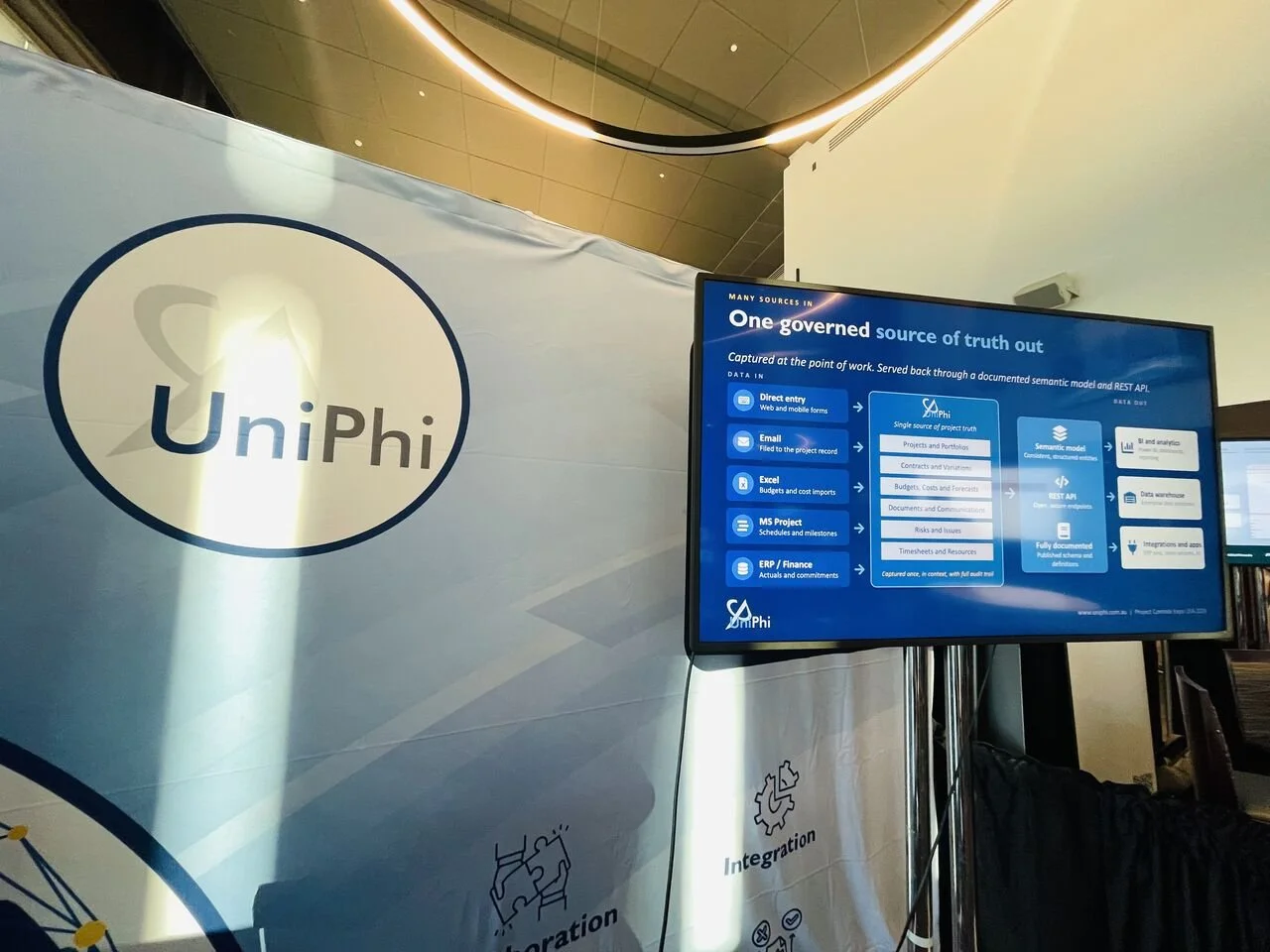
UniPhi was a Gold Partner and sponsor of this year’s Project Controls Expo USA, held at Nationals Park in Washington DC from 5 to 7 October. Fabrizio Baldi, one of our consultants, and I ran the UniPhi stand, caught up with current clients and met a lot of new faces. It’s one of the best rooms in the industry for honest conversations about how projects are actually controlled, what is needed today and what the future might look like.
I wanted to share some of the key insights with you.
Spreadsheets are still commonplace, but they are failing to meet client needs
What surprised me most was how many organisations still run disconnected point solutions, with people doing the job of joining them together. Spreadsheets have become the middleware, moving data between systems and reshaping it for reports. In many cases, spreadsheets are still the systems used to run major projects.
Major projects are unique endeavours, with a wide array of contract and reporting requirements to adjust for, so I can see why spreadsheets are favoured for their flexibility. However, client demand for reporting and dashboard access is increasing, and auditability and governance over data and reporting are becoming common requirements. That is something spreadsheets just cannot deliver.
The human is still the integration layer
That disconnected ecosystem of point solutions and spreadsheets takes a significant amount of human effort to collect data and customise reports. With every manual step, some feel they are losing governance and confidence in the numbers they report. What’s clear is that people, not technology, have become the data integration layer.
Some only look for enterprise-grade solutions like UniPhi when the volumes become so big the spreadsheets break. Where fees are tied to resourcing, becoming more efficient can feel counter-intuitive. But shifting the mindset from resource cost-plus to value added, and using technology to drive better outcomes, shouldn’t compromise the fee. It should create greater margin opportunity, while also meeting the rising client expectations on access, reports and dashboards I mentioned earlier.
Hoping AI will skip a maturity step, and can we trust it?
Some people were hoping AI could help them jump a maturity step, making sense of the mess so they don’t have to fix the underlying processes and disciplines. AI has a real role to play, and it can do a lot with varied data, but it won’t fix the process that created the mess. Perhaps an oversimplification, but you can’t make a good cake with rotten eggs. Data quality is still an important ingredient in getting the best from AI.
I have no doubt AI can hoover up dispersed and possibly poor-quality data and come back with some analysis or insight. People we spoke to are already using AI as a sounding board to augment their analysis and critical thinking. They also understood the value of the underlying practices and project controls, and that better data means better analysis and, ultimately, better decisions.
What was also interesting was how cautious most people were about AI in project controls, and how careful they were about including it in analysis and decision making. Most use cases were limited to data entry and transposing, and one question kept coming up: “What are our clients paying for when they engage our services?” Clients expect more than the thinking being subcontracted to AI. Accountability still sits with people, so they need to trust that both the human and the technology capabilities will deliver.
On stage and looking forward
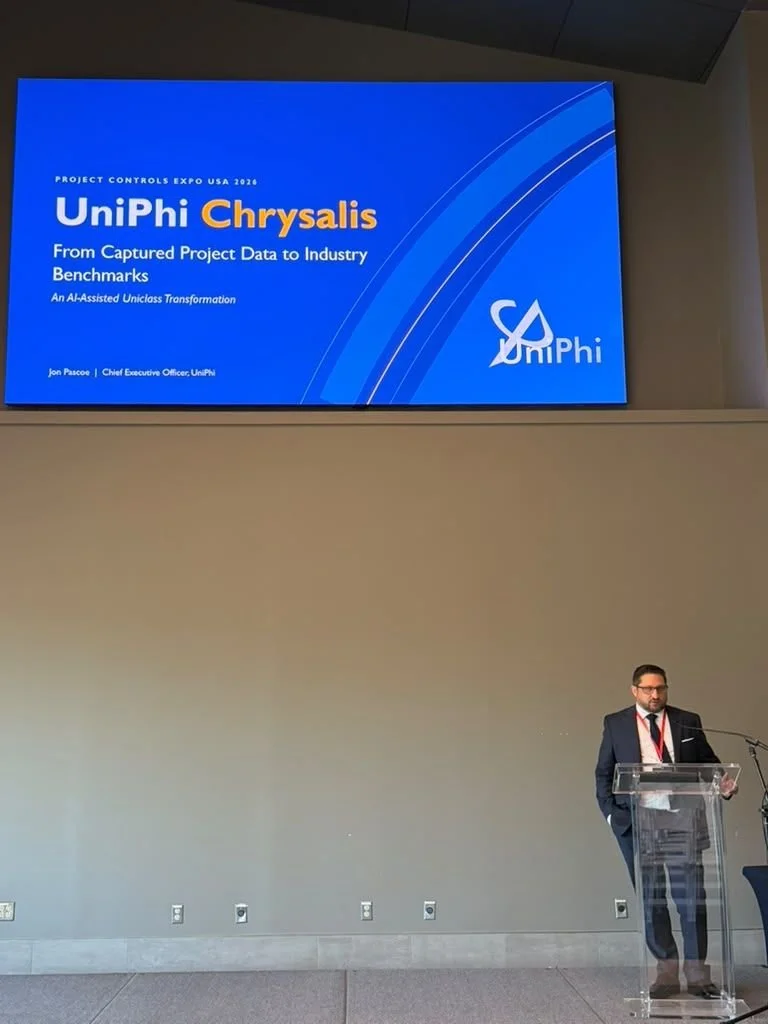
I presented a session on the unrealised value of historical project data and turning records into benchmarks. The idea is not new, but doing it at a meaningful, global scale remains unsolved. Each project’s data is unique in language, structure and meaning. It’s not that the data is poor quality, it’s that it is varied, and context is king.
We believe the first organisations to harness their collective history, experience and knowledge will hold a significant competitive advantage in bidding for and winning projects, and will deliver them with better returns. The room agreed. Most questions focused on how it was possible, including whether it can work with unstructured data. It can. Because the challenge is variety rather than quality, we can take data and files in many forms and bring meaning to them, without anyone having to clean them first. To me, the questions showed that people want that data and see its value.
It was my privilege to introduce our new product, Chrysalis, which turns that captured data into benchmarks and comparable data sets. The conversations I had with audience members afterwards confirmed this will be a new area of innovation for our clients as UniPhi helps them unlock the value in their data.
The impossible, and the familiar
The moment that stayed with me was the demos on the stand. More than once, someone realised partway through that they were looking at one platform replacing five systems and an army of spreadsheets. You could see it on their faces. For them it came out of the blue, but our clients have worked this way for over a decade. What looked impossible to them is familiar to us, and it’s a good reminder that we need to keep telling the story.
What good looks like
At an event this big and this deep, I’m sure everyone took away their own perspectives. Events like this show us the art of the possible and what good can look like, and they inspire many of us to bring changes and improvements back to our own organisations. If that’s you, connect with UniPhi. We’d be happy to show you what a connected project controls environment looks like and what a sensible next step might be. [Contact link]
Thanks to everyone who came to the session and stopped by the stand, and to Fabrizio for the long days on the floor.
Jon Pascoe
CEO, UniPhi