What Is a PMO? Definition, Functions and the Value It Should Deliver
The PMO was designed to integrate teams around value-adding investment. Most have become report factories. Here is the original definition — and the gap.
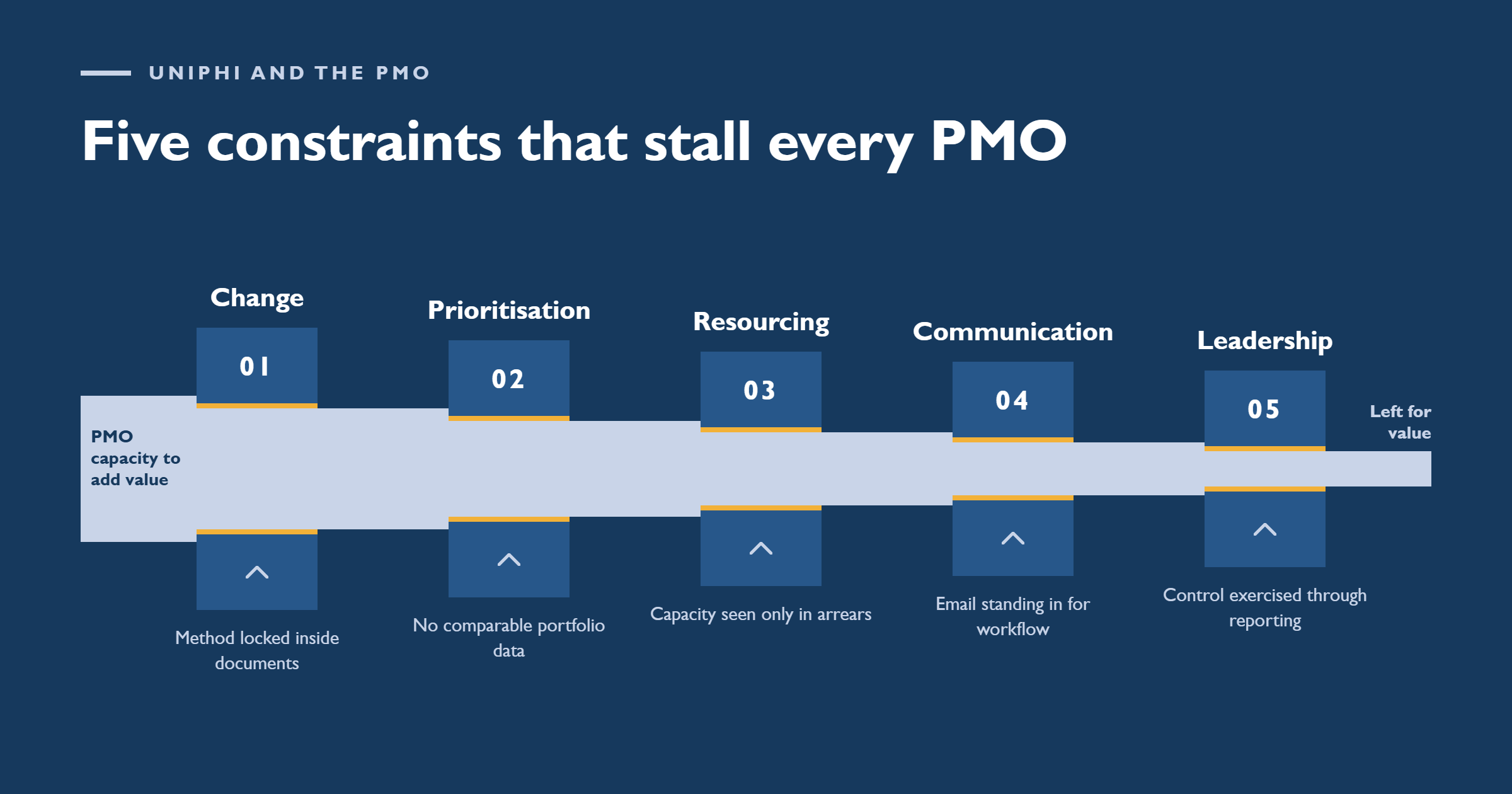
The Five Problems Every PMO Faces — and How to Solve Them
Five constraints turn up in almost every project management office. None of them are people problems — and all five have a structural fix
From Standardisation to Adaptation: The PMO and Complex Projects
Complex projects are not big simple projects. The standards that work on one actively harm the other — which puts the PMO in a genuine bind.
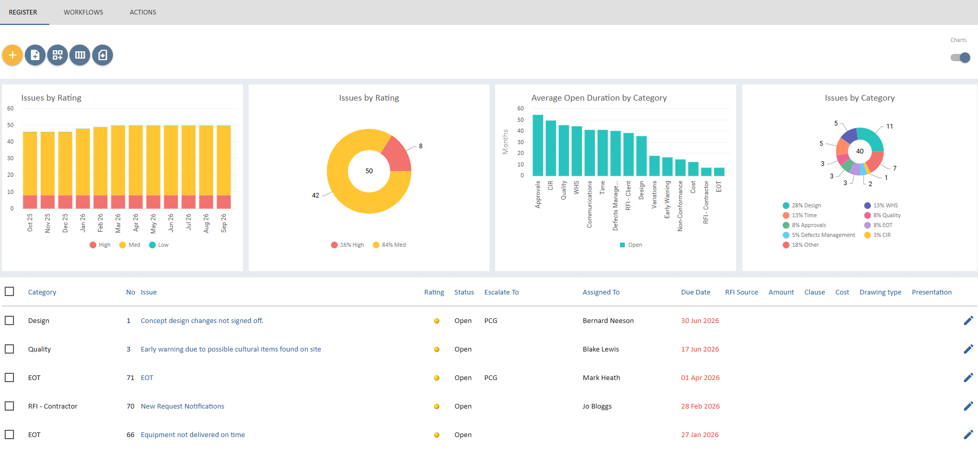
No Reports, No Email, No Inbox: Giving Your PMO Back 12 Hours a Week
What would your team do with twelve hours a week back? Enter data once, report never, and let the inbox go.
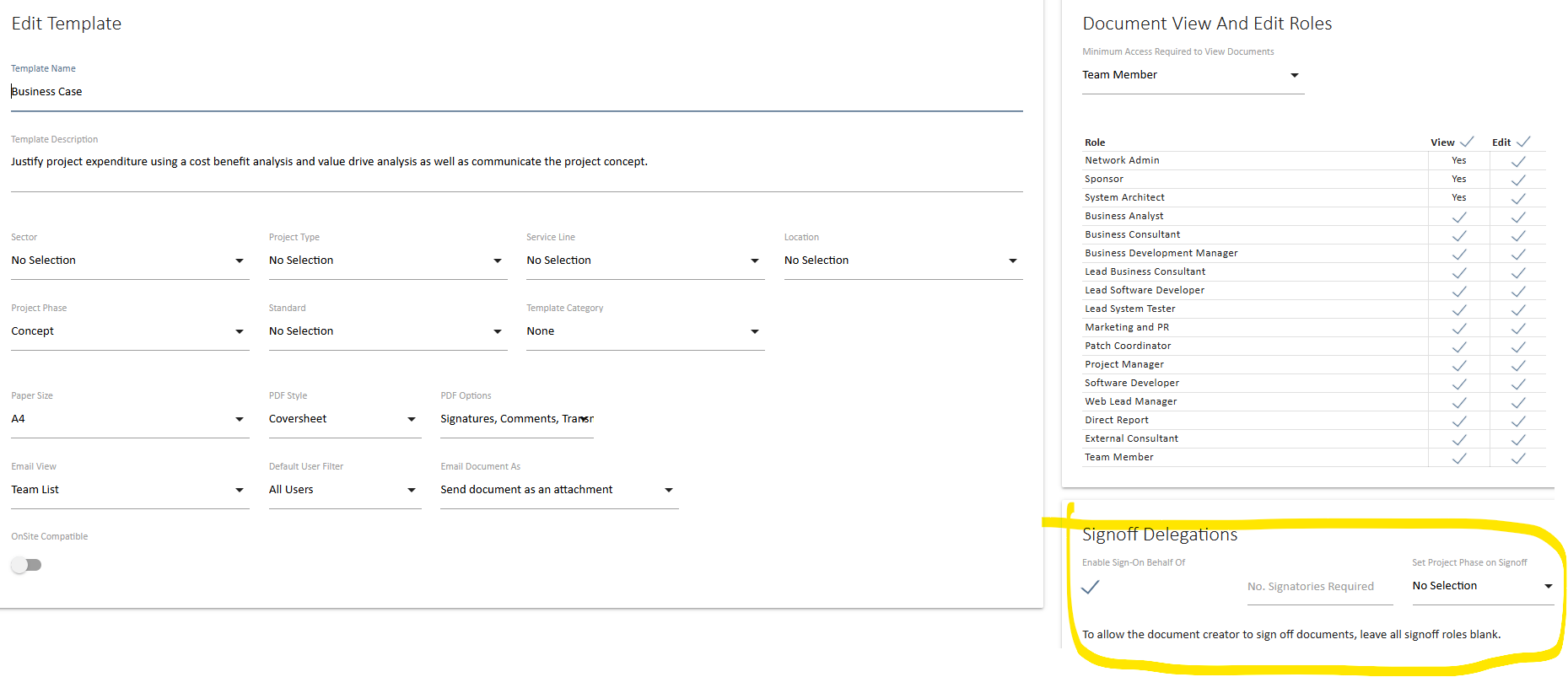
Standards vs Flexibility: Getting PMO Templates Right
Rigid where it matters, flexible where it doesn't. Get the line in the wrong place and your business case becomes a form-filling exercise.
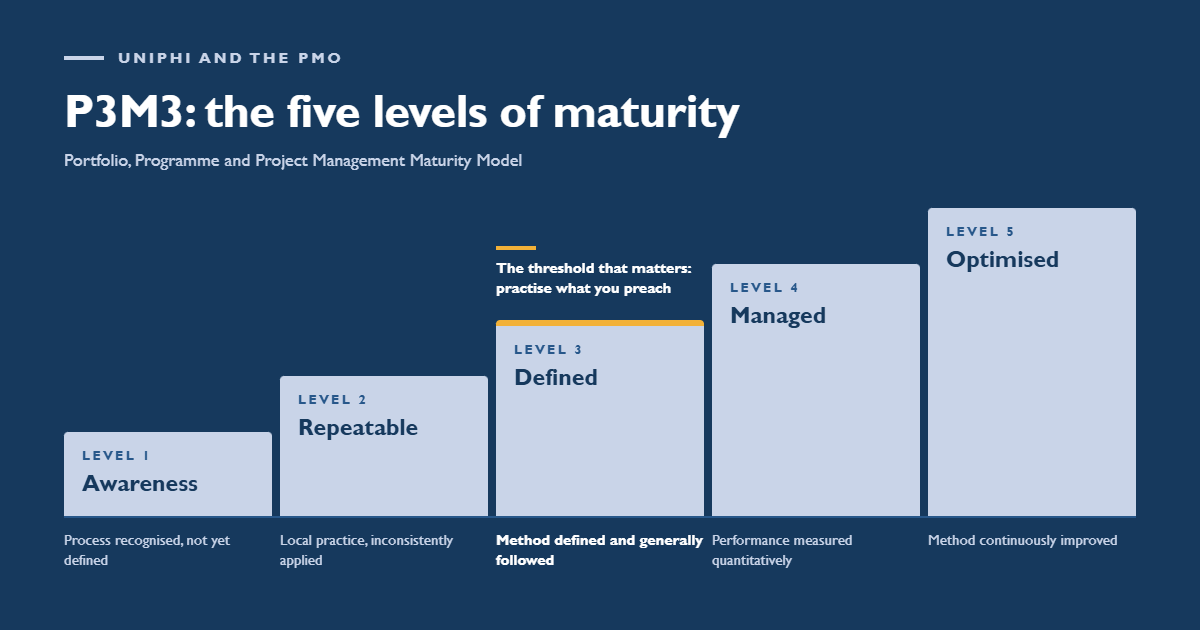
Methodology Compliance Without the Policing: Reaching P3M3 Level 3
The methodology lives on the intranet. The tools live somewhere else. Compliance is the gap between them — and it does not have to exist.
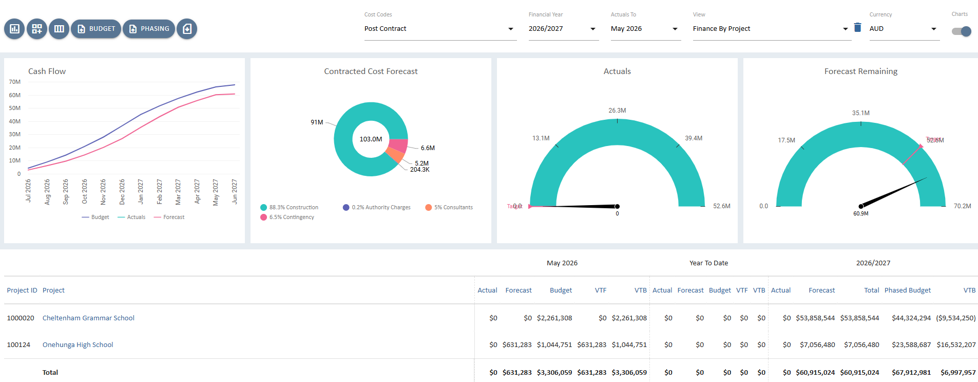
Automated Portfolio Cost Reporting for the PMO
Accurate, timely cost data changes portfolio decisions. It also changes the culture around them — automation makes the numbers harder to argue with.
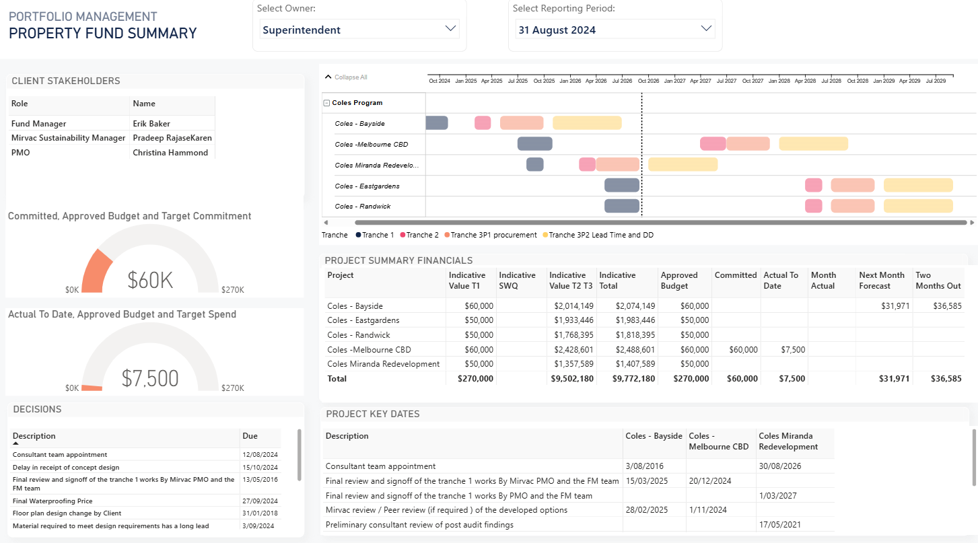
Ending Cut-and-Paste Consolidated Reporting
Ten project reports in three formats, manually assembled into an eleventh. There is a better way, and it starts with never producing the ten.
Project 13 in 2026: what's changed since we first wrote about it
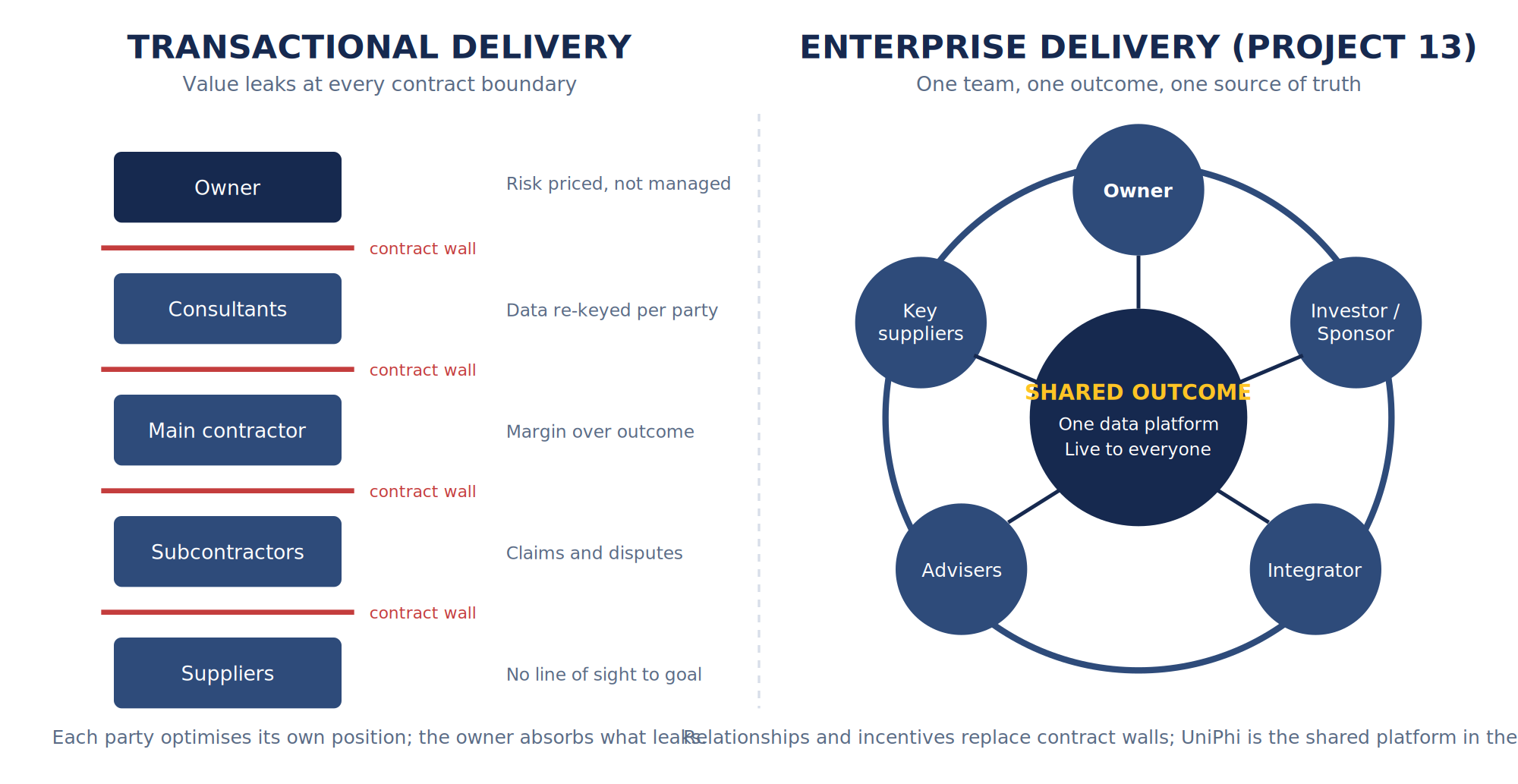
Project 13 has matured, and AI has changed what your project data is worth. Why the enterprise model is now urgent, not eventual.
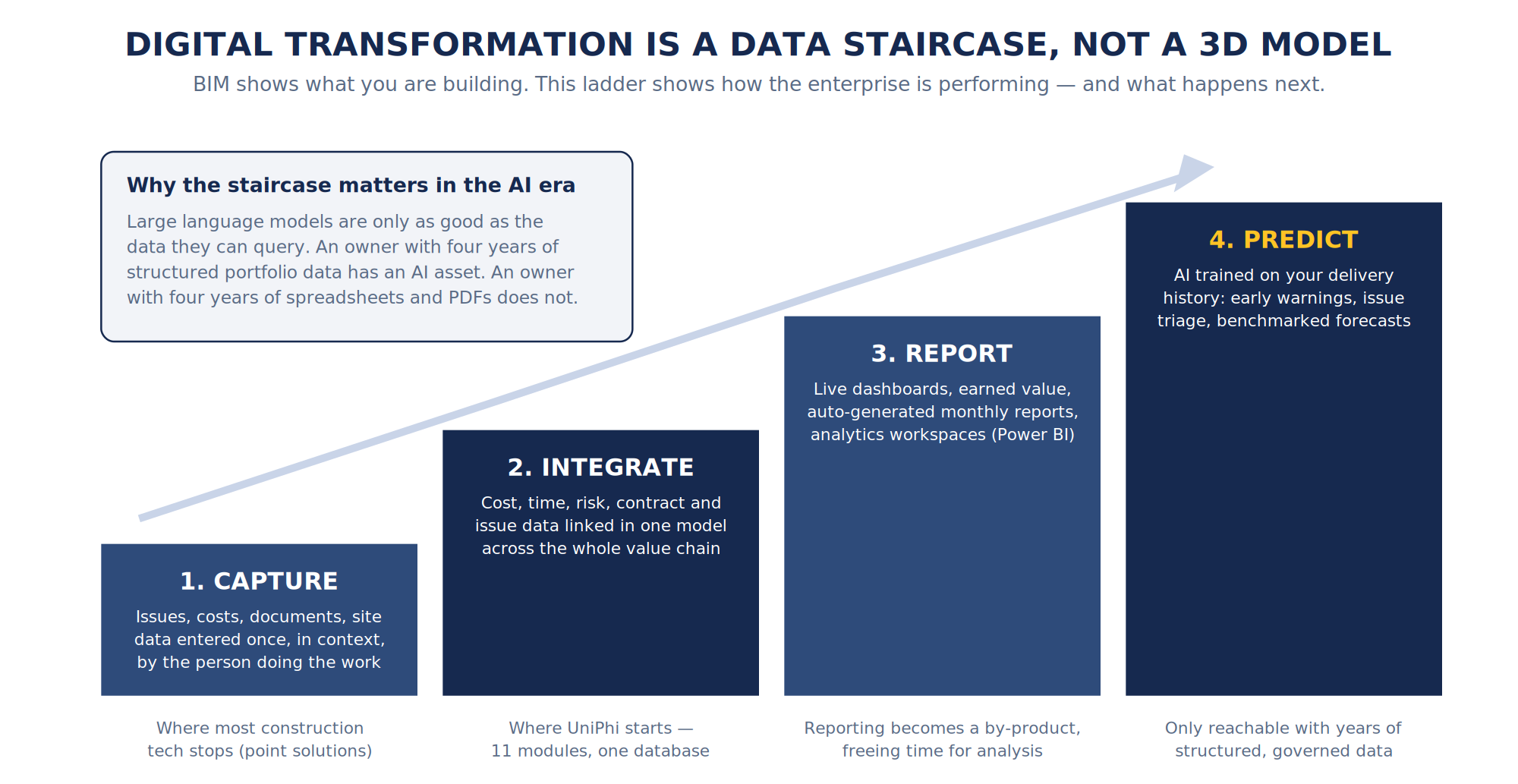
Digital transformation: more than BIM and the digital twin
BIM shows what you're building, not how you're performing. The four-step data staircase that takes an enterprise from capture to prediction.
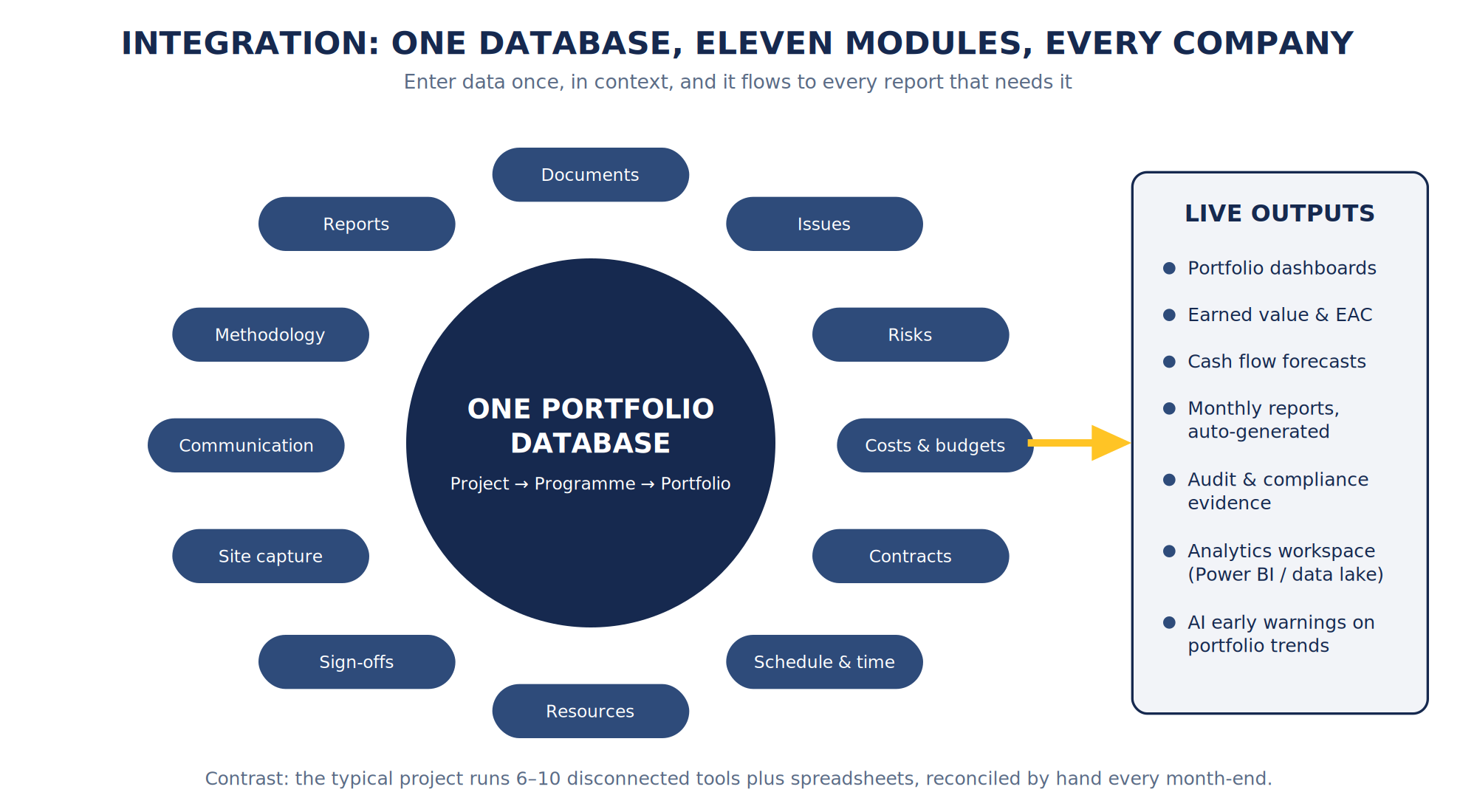
Integration: enhancing Project 13 success
Most projects run six to ten disconnected tools reconciled by hand. In a Project 13 enterprise, integration is architecture, not a person with a pivot table.
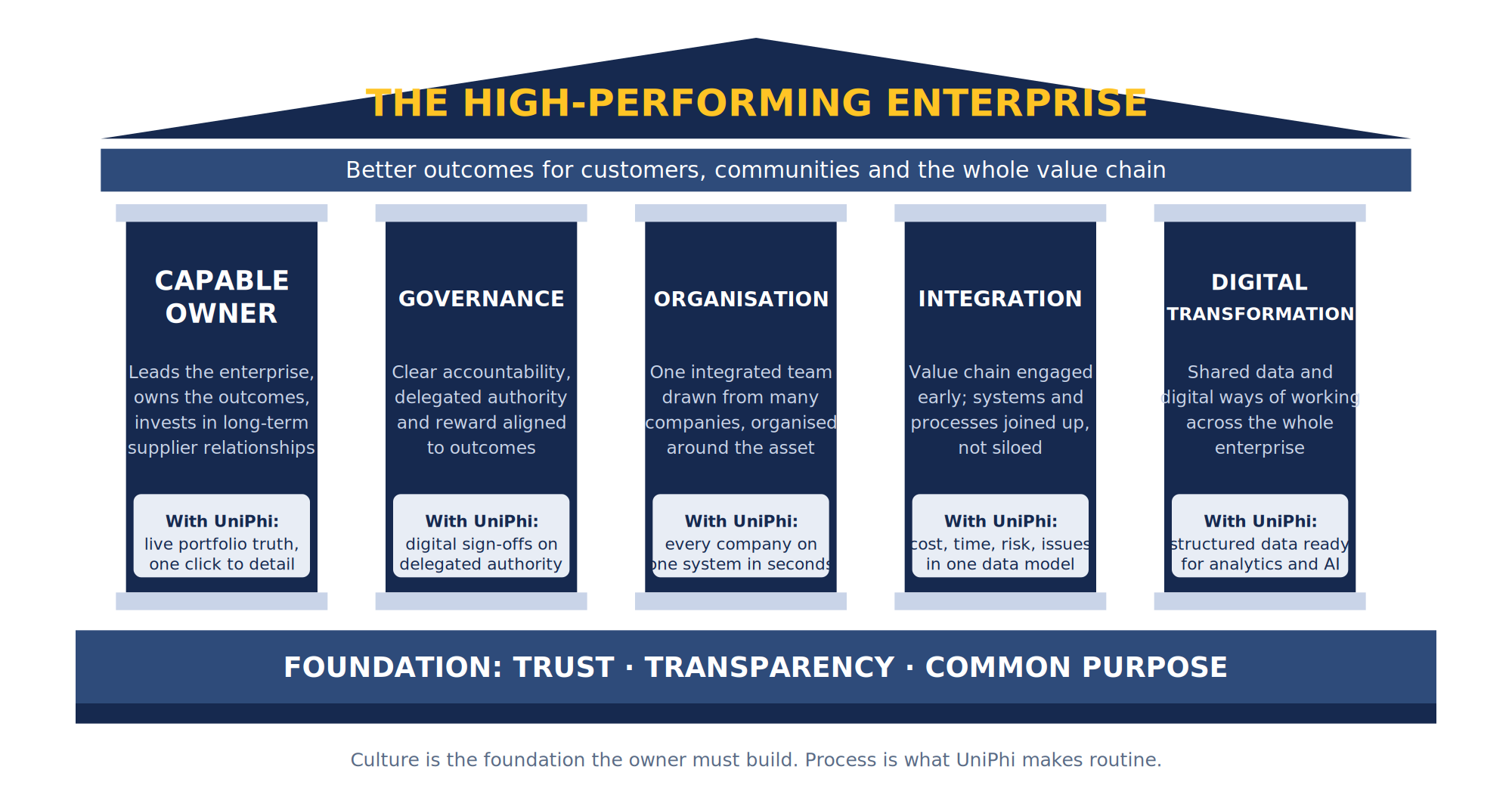
Organisation: one system for one Project 13 enterprise
Project 13 asks many companies to act as one team. That fails on fragmented systems — and changes completely on one database
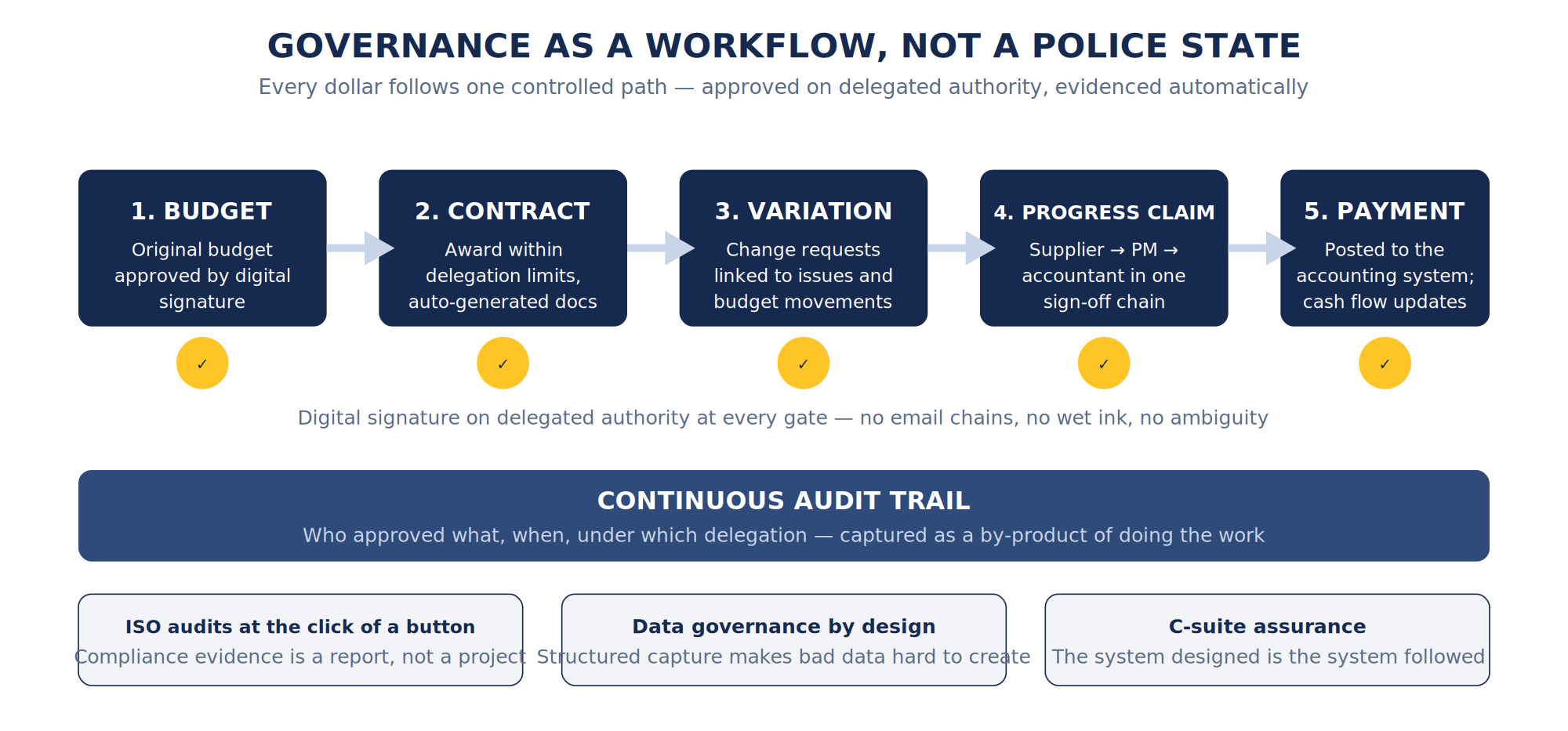
Governance: a workflow, not a police state
Delegated authority, digital sign-offs and an audit trail generated as a by-product of the work. Governance as a workflow, not a police state
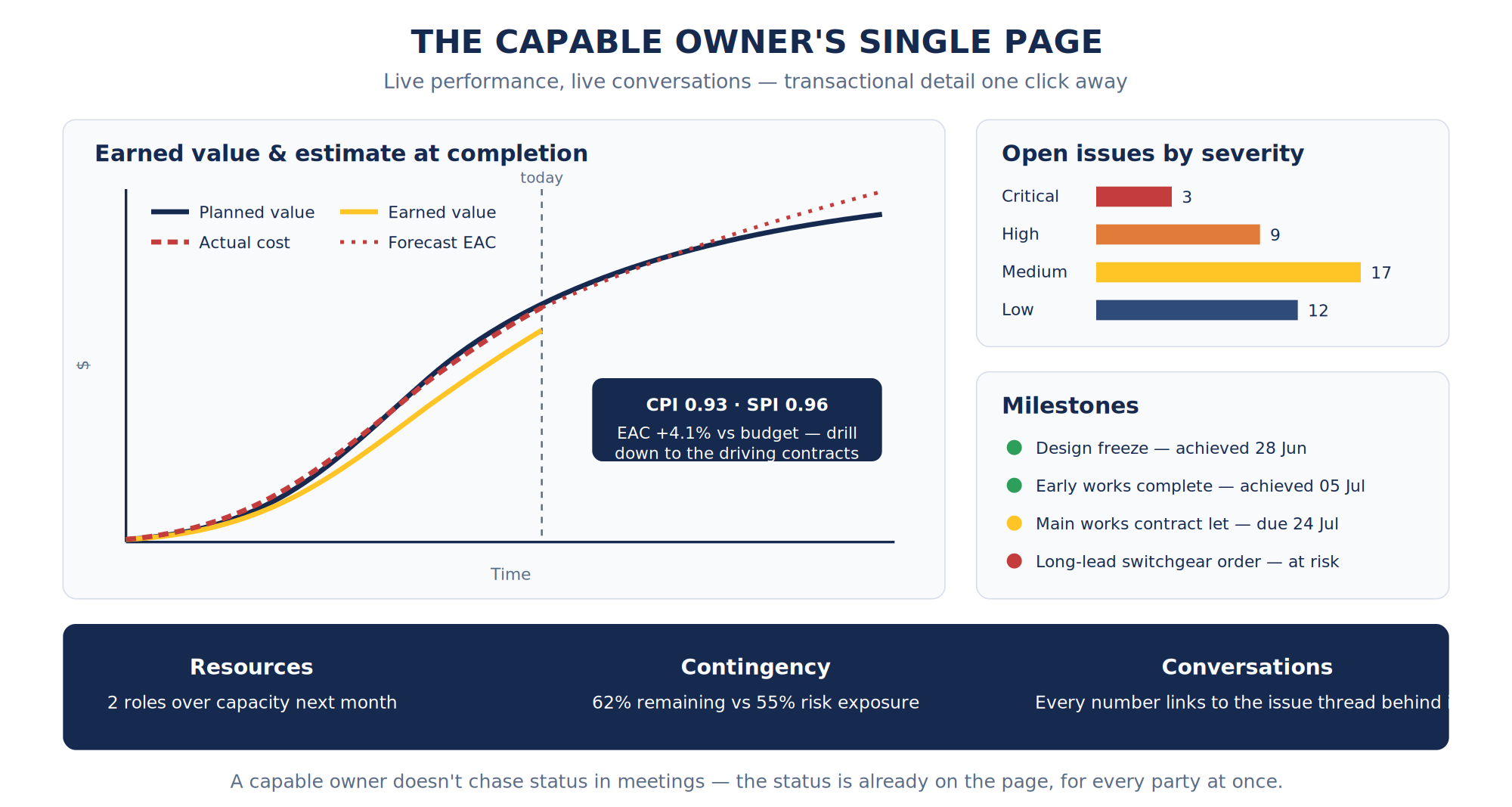
The capable owner: Project 13's foundation pillar
Project 13's hardest pillar isn't a job title — it's line of sight. What owner capability really means, and the single page that delivers it.